



What does viral mean in marketing?
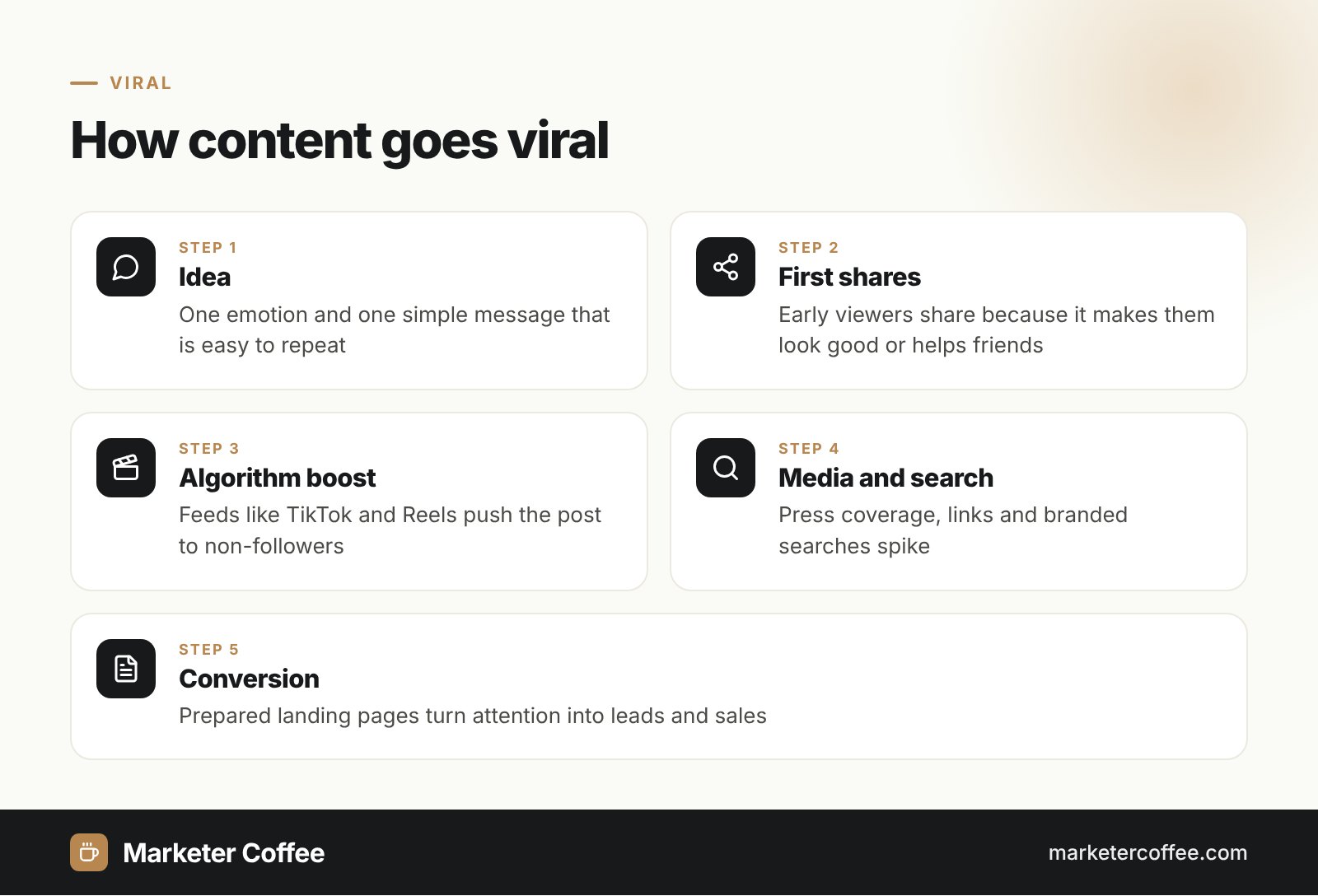
In marketing, viral means content whose reach comes mainly from shares, not from the brand’s own budget. One person shares it, several friends see it and share it further, and the audience multiplies in hours or days. Viral marketing is the deliberate attempt to create such content, and it is closely related to buzz marketing.
Where does the term viral marketing come from?
The term viral marketing became popular in 1996 and 1997. Jeffrey Rayport used it in the 1996 Fast Company article “The Virus of Marketing”, and media critic Douglas Rushkoff wrote about “media viruses” in the same year. In 1997 investors Tim Draper and Steve Jurvetson used the phrase to describe Hotmail, which added a sign-up link to every outgoing email and gained 12 million users in 18 months.
Why does content go viral? The STEPPS model
Content goes viral when it gives people a reason to share that benefits the sharer. Jonah Berger, a marketing professor at the Wharton School, describes 6 drivers in his 2013 book “Contagious”, known as STEPPS:
- Social currency: sharing makes the person look smart, funny or in the know.
- Triggers: everyday cues keep the idea top of mind.
- Emotion: strong feelings such as awe, amusement or anger drive action.
- Public: visible behaviour gets copied.
- Practical value: useful tips get passed on.
- Stories: the message travels inside a narrative.
Berger also points out that only about 7% of word of mouth happens online, so a viral idea often spreads in conversations too.
Famous viral campaigns
The most famous viral campaigns combine a simple action with a strong emotion.
| Campaign | Year | Result |
|---|---|---|
| Hotmail email signature | 1996 to 1997 | 12 million users in 18 months |
| ALS Ice Bucket Challenge | 2014 | $115 million raised in 8 weeks |
| Allegro “English for Beginners” | 2016 | almost 4.2 million YouTube views in 2 days |
Viral content on TikTok, Reels and in search
Today virality happens mostly in recommendation feeds. TikTok and Instagram Reels show videos to people who do not follow the creator, so one strong clip can reach millions without an existing audience.
For SEO, a viral moment creates a short spike in branded searches, mentions and links. In my projects I make sure a landing page and a press page are ready, because journalists and bloggers who cover the story give natural backlinks. Those mentions also help AI search engines recognise the brand as an entity.
How to plan for virality
Nobody can guarantee virality, but you can raise the odds with a repeatable process:
- Pick one emotion and one simple idea.
- Make the first 2 seconds of a video work without sound.
- Add an easy action people can copy, such as a challenge or template.
- Test several short versions instead of one expensive film.
- Prepare landing pages and SEO tracking before launch.
Frequently asked questions about Viral
What does going viral mean?
Going viral means that content spreads very quickly because people share it with others on their own. Reach grows from person to person instead of through paid advertising.
How many views count as viral?
There is no official threshold for viral content. What matters is fast, share-driven growth well above the account's usual reach, often millions of views within a few days.
What is an example of viral marketing?
The ALS Ice Bucket Challenge from 2014 is the classic example: it raised $115 million for the ALS Association in eight weeks. In Poland, Allegro's 2016 Christmas ad English for Beginners got almost 4.2 million YouTube views in two days.
Who coined the term viral marketing?
Jeffrey Rayport used the term in the 1996 Fast Company article The Virus of Marketing. Tim Draper and Steve Jurvetson popularised it in 1997 when describing Hotmail's growth.
Related terms
- Q&A: Jonah Berger on Contagious · Penn Today, University of Pennsylvania
- ALS Association: Ice Bucket Challenge actually had a dramatic impact · CBS News
- Allegro's Christmas ad English for Beginners · Stylist
- English for beginners: touching Polish advert goes viral · The Calvert Journal
- Viral marketing · Wikipedia
