

Ecommerce SEO is the practice of optimizing an online store so it ranks in search results and converts the traffic it earns. The numbers explain why it stays on every retailer’s roadmap: organic search drives roughly 33% of all ecommerce traffic and around 23.6% of ecommerce orders, SEO-driven leads convert at about 14.6% against 1.7% for outbound, and inbound methods cut acquisition costs by up to 61% compared with outbound. Over half of global web traffic now arrives on mobile, and Google’s own data shows a one-second delay in load time can cost 7% of conversions. I am Adrian Dąbrowiecki. I have run ecommerce SEO for retail brands including Aldi and Galeria Zapachu, for a B2B manufacturer entering the United States, and for an affiliate site competing against Ceneo and MediaMarkt. I also own a perfume ecommerce business, which is where a lot of the examples below come from. These are the sixteen things I actually work through on a store, with the numbers from those projects attached.
What Is Ecommerce SEO?
Ecommerce SEO is the practice of optimizing an online store to increase its visibility in search engine results pages, so it attracts more organic traffic and turns that traffic into sales.
The work covers product pages, category pages, site architecture, technical performance and content, aligned both with how search engines evaluate a site and with how someone actually shops. Those two goals overlap far more than people expect, which is why most ecommerce SEO improvements also raise conversion rate.
What separates it from other SEO is scale and intent. A store can have fifty thousand URLs, most of them near-identical, and the queries that matter are commercial: someone typing a product name is deciding, not researching. That combination changes almost every decision, from architecture to what you write on a category page.
Four Stores, Four Starting Points: What the Data Says
Everything below comes from four projects I led, chosen because they started from completely different places. One had no index presence at all, one had a domain rating of 1.4, one was already large, and one was an affiliate site competing against national retailers. Affiliate belongs in this list because the mechanics are the same as ecommerce: product entities, ranking pages, comparison tables, ItemList schema and a freshness cycle. The only real difference is who ships the box.
| Project | Type | Starting point | Result | Time |
|---|---|---|---|---|
| Planika | B2B ecommerce, US market entry | Domain not indexed in Google | 1,052 monthly organic visits, 882 keywords, 286 in top 3 | 9 months |
| Galeria Zapachu 24 | B2C ecommerce, fragrance | DR 1.4, no link budget | 21,200 monthly visits, 9,100+ keywords, +35% cart value | 12 months |
| Aldi.pl | Retail ecommerce, enterprise | 367,127 monthly clicks | 852,724 monthly clicks, +132% | 12 months |
| IDG-Online | Affiliate and local services | 500 monthly clicks | 30,000+ monthly clicks, 500+ keywords in top 3 | 16 months |
The useful thing about that spread is what it rules out. None of these won on domain authority, none of them won on budget, and two of them won with no link building at all. What they share is a topical map, standardized page templates and a republishing cycle.
7 Key Benefits of Ecommerce SEO
The main benefits of ecommerce SEO are credibility, lower acquisition costs, better user experience, higher conversion rates, competitive advantage, customer insight and consistent organic traffic.
1. Credibility and trust
Ranking high reads as endorsement. Moz found around 70% of users trust first-page results more than later pages, and Search Engine Land reported that 60% of consumers prefer organic results to ads. In categories where people are cautious about who they buy from, and replica fragrance is very much one of them, that trust gap is worth more than the click.
2. Lower acquisition costs
HubSpot puts the reduction in acquisition cost from inbound methods at up to 61% versus outbound. In practice the effect is compounding rather than immediate: paid stops when the budget stops, while a category page that ranks keeps producing orders at no marginal cost. On Planika we published seven articles over nine months and ended at 1,052 organic visits a month. In a niche where the buyer is an architect specifying a product years before installation, that is a qualified audience arriving every month at no marginal cost, and it keeps arriving after the invoice stops.
3. Better user experience
Speed, mobile quality and security are ranking inputs and conversion inputs simultaneously. Google’s figure is that one second of extra load time cuts conversions by around 7%, which on a store with real volume is a number the finance team understands immediately.
4. Higher conversion rates
Econsultancy measured SEO-driven leads converting at 14.6% against 1.7% for outbound methods such as print. The mechanism is intent: nobody types “buy running shoes online” by accident.
5. Competitive advantage
Ahrefs found that over 90% of pages get no organic traffic from Google at all. That statistic is usually quoted as a warning. I read it as an opportunity, because it means most of your competitors’ catalogues are invisible, and consistent work on the pages that matter puts you ahead of a field that mostly is not trying. IDG-Online took top 3 positions for Poland’s most competitive product rankings against Ceneo, MediaExpert, MediaMarkt and Komputronik, none of which it could match on authority or budget.
6. Customer insight
Search data is the cheapest market research available. Query volumes by country and language tell you which products have demand, which markets want them and what language buyers use, which is information you would otherwise pay a research agency for.
7. Consistent organic traffic
BrightEdge puts organic search at roughly 53% of all website traffic. For a store, that is the difference between a business that owns its demand and one that rents it monthly.
16 Tips to Improve Ecommerce SEO
These sixteen tips cover competitor analysis, keyword research, architecture, internal linking, topical maps, performance, mobile, on-page work, links, structured data, local SEO, Search Console hygiene, international setup, JavaScript, AI search and reviews.
1. Analyze your SEO competitors
Competitor analysis is where a content strategy starts, because it tells you what the market already rewards. My process has four steps: scrape their sitemap, extract the data, analyze it in Ahrefs, then build a better topical map.
The sitemap, usually at domain.com/sitemap.xml, reveals three things a tool will not: how often they publish, how often they update existing pages, and how many pages they consider worth having. If a competitor publishes three articles a week, four is the answer. If they refresh cornerstone pages quarterly, refresh yours more often. Freshness signals decay, and roughly six months is the working assumption I use.
Volume is where judgement comes in. A competitor with a thousand indexed pages is not automatically ahead. If they have ten articles about running shoes, you can either consolidate into seven stronger ones to avoid cannibalization, or go deeper with fifteen. What you cannot do is match them page for page and expect to win on nothing.
Then use Ahrefs Site Explorer on their domain: referring domains show you which publications in your niche give links, top pages show you which content earns their traffic, and organic keywords show you the gaps you can fill.
On IDG-Online the competitors were Ceneo, MediaExpert, MediaMarkt and Komputronik, all with vastly more authority. The sitemap analysis showed the same thing every time: enormous catalogues, shallow ranking pages, rarely updated. So we did the opposite. Fifty-plus ranking pages, each genuinely comparative, republished every 90 days. The site took position #1 for “najlepsza kamera do monitoringu podwórka”, “ranking kamer sportowych”, “ranking telewizorów OLED” and “ranking kamer szpiegowskich”, and #2 to #3 for the 55-inch, 65-inch and generic TV rankings.
Read the IDG-Online case study →
2. Perform keyword research
Ecommerce keyword research is about meaning and intent, not just volume. The question is not which phrase has the most searches but what someone typing it expects to find, and whether your store can be that result.
Read the SERP before deciding the format. “Ecommerce SEO agency” returns a mix: informational lists of agencies, transactional homepages, and localized results depending on the searcher’s country. “Buy running shoes” returns product listings, while “best running shoes for beginners” returns guides. Publishing the wrong format for a query means competing in a race you already lost.
Use volume to decide structure rather than priority. Low-volume related terms usually belong inside one comprehensive page; genuinely distinct intent deserves its own. My default is fewer, deeper pages than the competition, because value per page is what compounds.
Planika is the clearest example of intent beating volume I have. Seven articles, all of them chosen because an architect has to answer that exact question before specifying a fireplace: dimensions by type, gas running cost, electric running cost, US manufacturers, types, differences between types, maintenance. Seven pages produced 882 ranking keywords, because a page that fully answers one commercial question picks up the long tail around it automatically.
Read the Planika case study →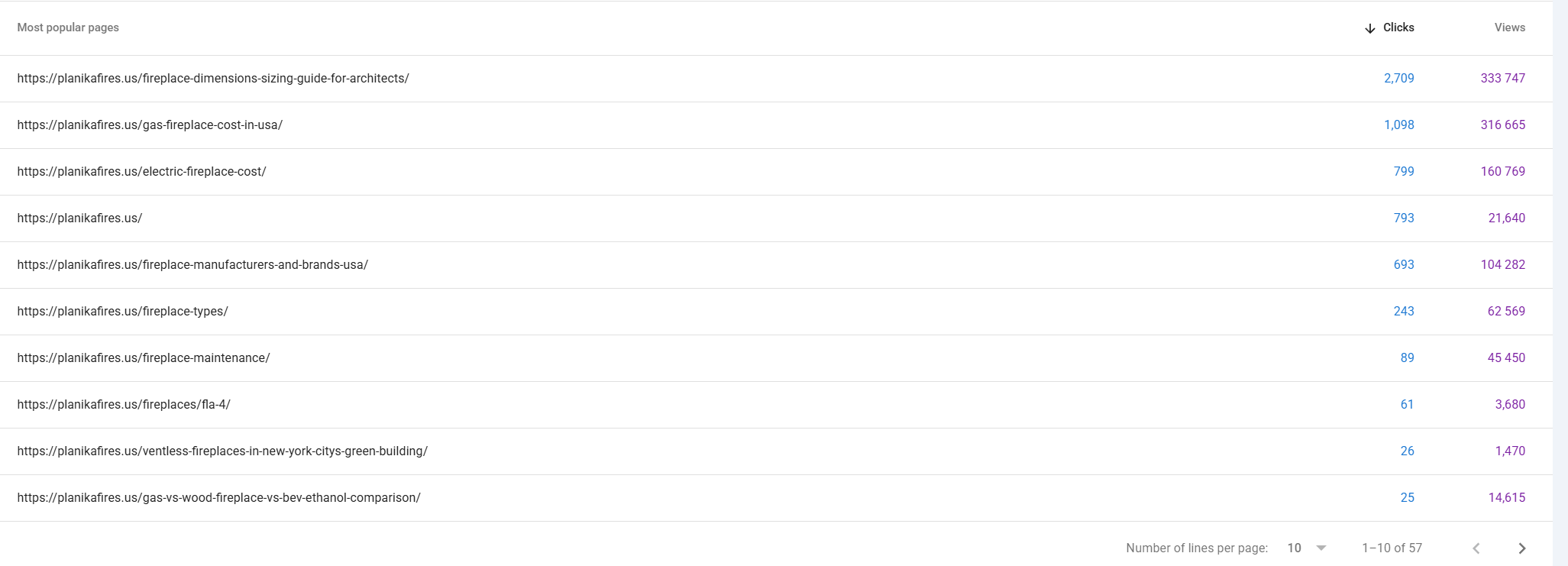
3. Create the information architecture
Architecture decides where authority flows. Header links, footer links and the homepage carry the most weight, so what you link from them is a statement about what matters. Money pages and pillar pages should be reachable in few clicks; privacy policies and cookie notices should not be sitting in primary navigation absorbing link equity.
URLs should mirror the hierarchy and stay clean. Use example.com/category/subcategory/product rather than a flat structure, avoid capitals, underscores, diacritics and special characters, and keep blog URLs topical rather than copying the full headline.
Aldi.pl is the project where architecture did most of the work. The menus were overloaded, which pushed important pages deep and wasted crawl budget on a very large site. We audited the navigation, cut redundant links, rebuilt it into a clean two-level hierarchy and fixed the URL taxonomy. Combined with product content standardization, organic clicks went from 367,127 to 852,724 in twelve months, a 132% increase, with top 3 positions on the leaflet queries that convert hardest in Polish grocery retail.
Read the Aldi case study →4. Improve internal linking
Internal links do two jobs: they move authority and they teach search engines how your content relates. Pages with more internal links get crawled more often, which on a large catalogue directly affects how quickly changes are noticed.
The pattern that works in retail is content linking to commerce. An article on summer fragrances should link, with a descriptive anchor such as “citrus perfumes”, to the citrus category page and to individual products worth featuring. Put some of those links high in the article rather than burying them all at the end.
On Galeria Zapachu the ranking articles became the distribution layer for the whole catalogue. Listicles alone averaged 250+ clicks a day, and every one of them fed category and product pages through descriptive internal links. That is why the 60+ category descriptions were written as internal-link hubs rather than as decorative text above the product grid.
Read the Galeria Zapachu case study →5. Create a topical map
A topical map is the plan that keeps everything else coherent. Identify the topics tied to your central entity, connect them semantically, and balance topics that make money against topics that build authority and historical data.
For a perfume store, that means covering the core entity first, then expanding outward: fragrance families, concentrations, base oils, essential oils, atomizers, bottle design, seasonality. Each of those has search demand and each strengthens the store’s claim to the wider subject. Koray Tuğberk Gübür’s work on semantic SEO and topical authority is the best material available on building these properly, and it shaped how I do it.
Galeria Zapachu started at DR 1.4 with no link building. We clustered 400+ topics into rankings, comparisons, how-to, notes and accords, and gift-intent silos, then defined fixed entity lists for notes, families, longevity, sillage and seasons so every page described a product the same way. The result after twelve months: 9,100+ ranking keywords, roughly 21,200 monthly visits, top 10 in Poland for the head term “perfumy” and #8 for “perfumy męskie”. IDG-Online used the same method at smaller scale with 100+ clustered topics.
Read the Galeria Zapachu case study →
6. Increase site performance
Speed sells and speed saves crawl budget. Google’s data shows that shaving 0.1 seconds off load time can reduce bounce rate by around 5.7% and lift conversions by 8.4%, which is an unusually direct link between a technical fix and revenue.
Beyond the usual Core Web Vitals work, check the average server response time in Search Console under Settings and Crawl Stats. It is the fastest way to see whether your hosting is the constraint, and on large catalogues it frequently is.
7. Get mobile right
Mobile-friendly means more than responsive. Check Analytics or Clarity to see what your actual audience uses, because the answer varies enormously by category. My perfume store sees around 80% mobile, so checkout speed and thumb-friendly navigation are the priorities. Planika is the opposite case: architects specifying a fireplace are reading dimensions and clearances at a desk, so detailed specification tables mattered more than thumb reach.
Worth considering: a Progressive Web App. Faster repeat loads, usability on poor connections and push notifications for abandoned carts or seasonal sales, which is a channel most stores never open.
8. Improve on-page SEO
Product pages need real detail, not adjectives. For fragrance that means price, brand, scent family, notes, concentration, longevity, bottle, target audience, occasion and season. Every one of those attributes is a query someone types, and including them turns one page into an answer for dozens of long-tail searches.
Internal linking belongs inside product copy too. If a description mentions bergamot, link bergamot to the category of bergamot fragrances. It helps shoppers navigate and it tells Google how your catalogue is organized.
This is the tip with the clearest revenue number attached. On Galeria Zapachu we rewrote 750 product descriptions against a fixed attribute template with Product schema, and average order value rose 35%. The ranking gain was real, but the cart value gain came from shoppers finding what they needed on the page instead of leaving to check it somewhere else.
Read the Galeria Zapachu case study →For blog content: answer the question in the first sentence, then expand. Use numbered specifics rather than vague headings. Add data and units. Avoid “it depends” as an opening. As I wrote in the Landingi version of this guide:
“The number of words is not a ranking signal” Adrian Dąbrowiecki, Ecommerce SEO: Definition, Benefits, Tips and Best Practices, Landingi
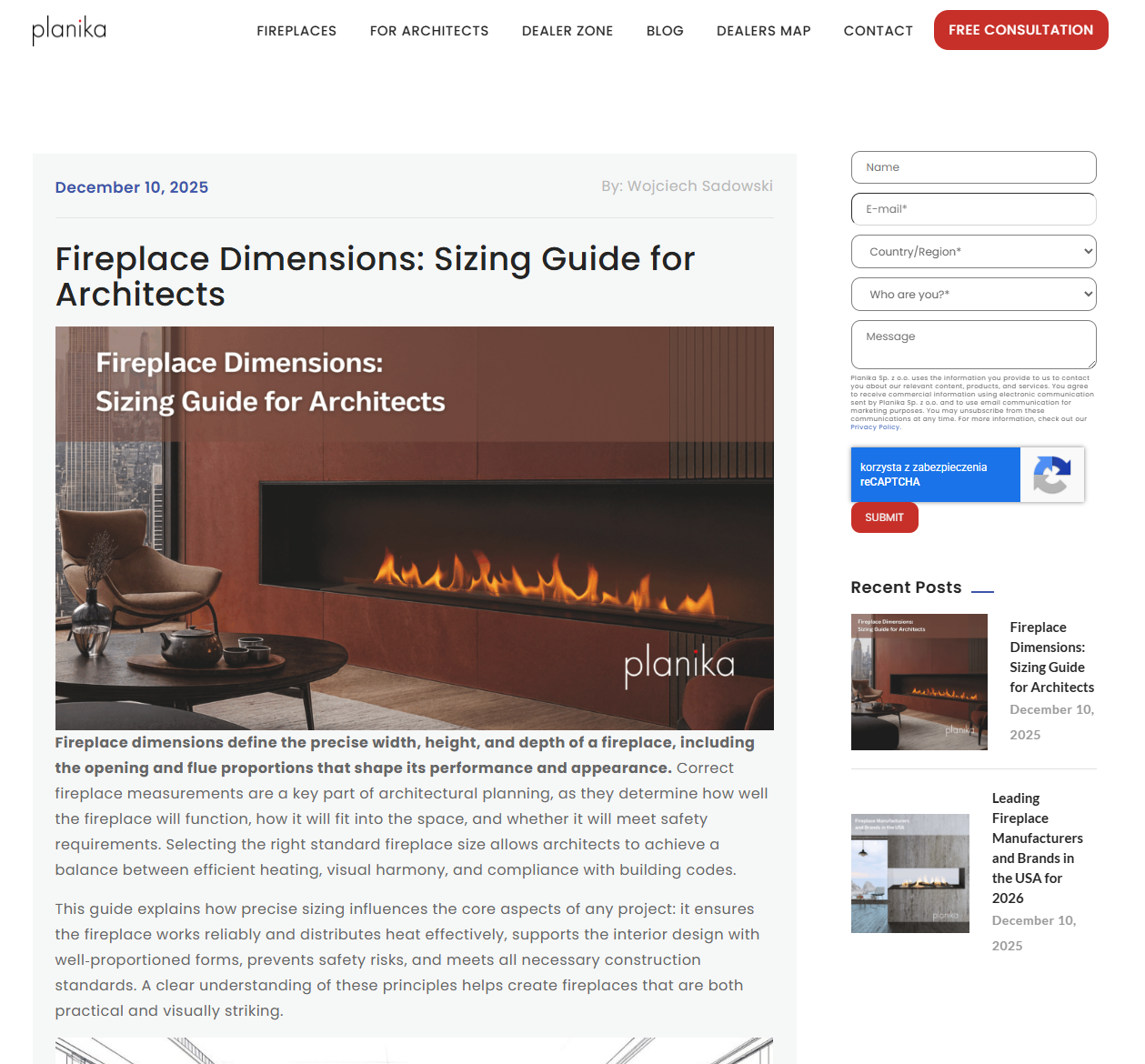
One thing I now treat as part of on-page work rather than as design: the images. Every graphic on the Planika articles was produced to a spec that carries the article heading for context, the brand logo, and a real example of the arrangement being discussed, so the visual reinforces the same meaning as the text. Koray Tuğberk Gübür calls this visual semantics, and on a store it costs almost nothing to adopt because you already have product photography.
9. Build a link strategy
Links remain a large share of ecommerce SEO success, and they function partly as insurance: a store with a genuine link profile survives core updates that damage stores without one.
Two approaches produce links without buying them. An affiliate programme gets reviewers and ranking articles pointing at your product pages, which is exactly the link type that is hardest to acquire manually. Publishing original statistics gets citations, because everyone quoting a number links to whoever presented it rather than hunting for the primary source.
Two of these four projects were run with no link building whatsoever. Galeria Zapachu reached 21,200 monthly visits at DR 1.4 with link building deliberately deferred until the content proved its return. On Planika we bought nothing and the referring domain curve still rose, because pages that answer a specification question end up cited by people writing about it. Neither of those is an argument against links. It is an argument against buying them before you have anything worth linking to.
Read the Planika case study →10. Implement structured data
Structured data lets search engines understand your pages with less computation, which matters more than it sounds: Google is running a business, and cheaper comprehension is a real advantage.
Product schema on product pages, carousel or item list markup on category pages, review markup where reviews genuinely exist. That last condition is not optional. Fake review markup is a policy violation and it is one of the more commonly enforced ones.
The pairing that has worked on every one of these projects: Product schema on PDPs, ItemList on ranking and category pages, FAQPage on the question blocks, and Breadcrumb everywhere. IDG-Online ran exactly that set across its ranking templates, and Aldi’s product pages were rebuilt on Product schema as part of the standardization work.

11. Use local SEO
Even a store shipping nationally benefits from local queries. If Ahrefs or Semrush show demand for “perfume store near me” or city-level variants, those are markets with proven intent and usually weaker competition than the head terms.
Keep the Google Business Profile active: collect reviews, publish offers, and add products, which almost no retailer bothers to do. Adjust keywords to the vocabulary of your niche, fragrance, notes, scent, essence, rather than generic retail language.
With physical locations the problem is usually data consistency rather than content. On Aldi.pl the store data was fragmented across several sources, so we implemented PinMeToo to synchronize it centrally and cleaned up the NAP inconsistencies between the Google Business Profile and the on-site locator. Local pack visibility improved without a single new page being written.
Read the Aldi case study →12. Fix Search Console issues
On a large catalogue, indexing problems cost more traffic than any content weakness. The recurring ones are always the same:
- Alternate page with proper canonical tag
- Duplicate without user-selected canonical
- Duplicate, Google chose a different canonical than the user
- Crawled, currently not indexed
- Discovered, currently not indexed
- Excluded by noindex tag
- Server error 5xx
Most of them resolve the same way: make canonical tags consistent and self-referencing on the canonical version, keep only canonical indexable URLs in the sitemap, point internal links at the canonical, and consolidate genuine duplicates with 301s. The two “not indexed” states are different in character, they usually mean the page is not distinct or valuable enough, so the fix is content and internal linking rather than a technical toggle.
Set the target at zero and treat anything remaining as a deliberate decision rather than a backlog.
Planika began below all of that. The US site was not indexed in Google at all on 10 August 2025, so the entire first phase was crawling and indexing before a single article went live. Then the content shipped in a steady sequence rather than one bulk drop, which gives Google a reason to keep coming back. The curve below runs from that zero to 1,052 monthly organic visits on 4 May 2026.
Read the Planika case study →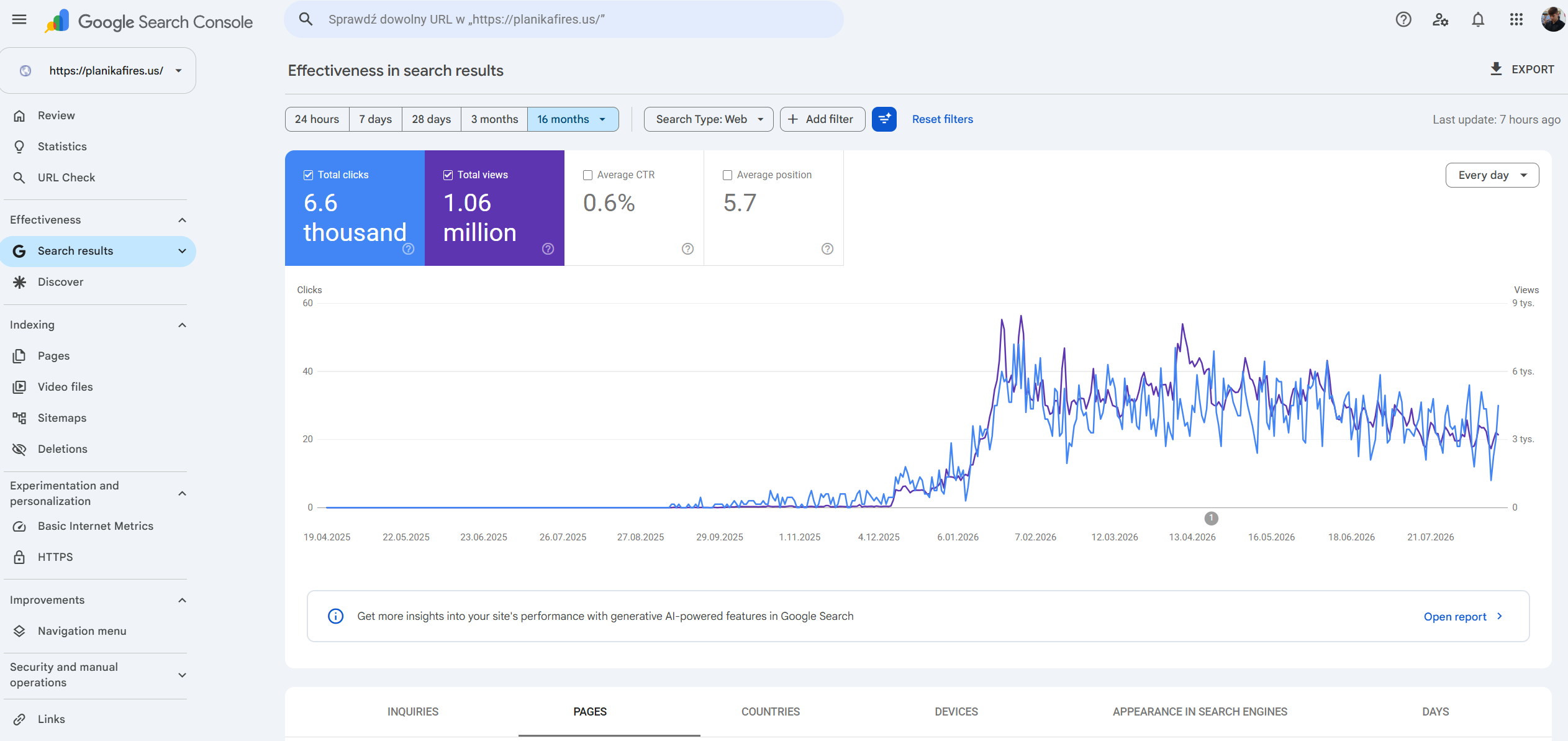
If you want to check where a store stands before opening Search Console, we built a free SEO indexing checker that shows what Google actually has.
13. Use multilingual and multiregional SEO
Translating a store is one of the cheapest growth levers in ecommerce, and it is chronically underused. Consistent hreflang in the HTML, sitemaps or headers; subfolders rather than subdomains so authority stays centralized; localized content that keeps facts consistent while adapting culturally; local servers or a CDN for speed; and internal linking that connects language versions properly.
Here is the part most stores miss. Even markets you do not sell to are worth translating for, because the additional versions generate historical search data, strengthen the domain and improve rankings in your home market. And if Google is auto-translating your pages for a market, that is a signal in itself: it means demand exists there and local content quality is poor.
The Planika project is the argument for localizing facts rather than words. Fireplace dimensions differ by country because building codes differ, so we published the American numbers, in inches and feet, with BTU ratings and USD price ranges, and named the manufacturers an American architect actually compares against. A translated European article would have matched the keyword and failed the intent. That distinction is what took a brand with no US recognition to 286 keywords in the top 3.
See how we approach the US market →14. Implement JavaScript SEO
If the store runs on a JavaScript framework, prefer server-side rendering over client-side. CSR delays content for crawlers and wastes crawl budget, and on a catalogue of any size that turns into pages that never get indexed.
Five things I check on every JS store: critical pages are not client-rendered; content inside accordions and tabs actually exists in the DOM; pagination uses real anchor links rather than JavaScript handlers; the rendered DOM matches the raw HTML for anything important; and heavy pages have a pre-rendering or hybrid solution. The URL Inspection tool comparing raw against rendered is the quickest diagnostic here.
15. Optimize for AI search
What was called SGE is now AI Overviews and AI Mode, and it changes what a good product page looks like. A large share of queries now get answered above the results, so being the source those answers cite is the new position one.
What earns citations is detailed, structured, checkable content: full product attributes, clear comparisons, real specifications, schema that states facts explicitly. Community presence matters too, because AI systems draw heavily on Reddit, Quora and forums where people ask which product to buy. Being genuinely helpful there, rather than dropping links, is slow but it is one of the few levers that works on this surface.
Planika gave me the cleanest measurement of this I have seen, because the domain had no history to confuse the picture. Seven answer-first articles produced, by Ahrefs count, 401 mentions in Google AI Overviews, 173 in Google AI Mode, 136 in Perplexity, 70 in Gemini, 20 in ChatGPT and 7 in Copilot. Nothing was written for AI specifically. The format that wins featured snippets, a direct answer followed by supporting detail, is the same format these systems quote.
Read the Planika case study →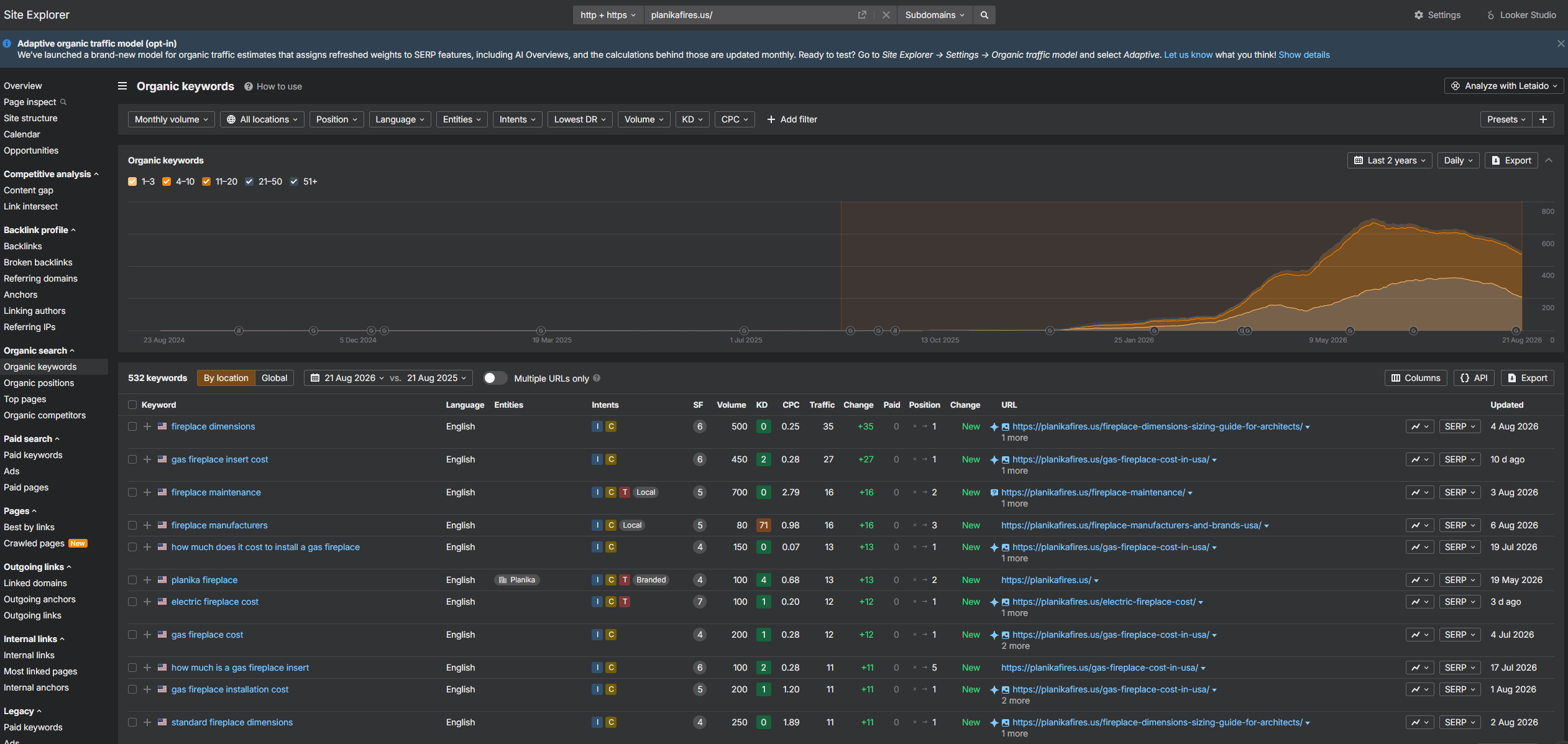
The other half of AI-era visibility is Google Discover, and affiliate and ecommerce sites are treated similarly there. On IDG-Online, Discover became the recovery channel after the March 2024 update, running at 200+ clicks a day and accounting for up to 90% of the traffic we could recover. What earns it is unglamorous: compelling images at the right dimensions, honest titles and clean metadata.
16. Get reviews on product pages
Reviews affect rankings, conversion and click-through rate at once. Review schema produces stars in the results, and stars change CTR on pages whose position has not moved at all.
Two rules I hold to. Get more reviews than the competing pages, because volume is comparative rather than absolute. And keep sentiment consistent with what people say about you elsewhere: a store with perfect on-site reviews and mediocre ratings on independent platforms looks exactly as suspicious as it is.
What Actually Moved the Needle Across All Four Projects
Reading back through four very different stores, the same five things recur regardless of size, market or budget.
- A topical map before any writing. Galeria Zapachu clustered 400+ topics, IDG-Online 100+, Planika defined a scope small enough that seven articles could cover it completely. None of them published at random.
- Standardized page templates. Fixed attributes on 750 fragrance PDPs, a rebuilt product template across Aldi’s catalogue, one ranking template reused across 50+ IDG pages. Consistency is what wins snippets and what makes scale survivable.
- A 90-day republishing cycle. Both Galeria Zapachu and IDG-Online ran it as policy, not as an occasional cleanup, and on IDG it was central to recovering from a core update.
- Ranking pages early. Listicles delivered 250+ clicks a day on Galeria Zapachu and were the entire traffic engine on IDG-Online. They capture commercial intent and distribute internal link equity to the catalogue at the same time.
- Links last, if at all. Two of the four ran with zero link building and both worked. Authority was earned by covering a subject completely rather than by buying placements.
FAQ About Ecommerce SEO
How is ecommerce SEO different from other types of SEO?
Ecommerce SEO differs from other SEO by focusing on product-level optimization, high-purchase-intent keywords and conversion rather than on informational content and brand authority.
The technical demands are also heavier: site architecture across thousands of URLs, faceted navigation, duplicate content from manufacturer descriptions, and a checkout flow that is part of the ranking picture because it shapes user behaviour. Traditional SEO optimizes for attention. Ecommerce SEO optimizes for the purchase funnel end to end.
Is affiliate SEO the same as ecommerce SEO?
Affiliate SEO and ecommerce SEO share most of their mechanics: product entities, ranking and comparison pages, ItemList and FAQ schema, attribute consistency and a freshness cycle. The difference is fulfilment, not method.
Two things do diverge. Affiliate sites carry more algorithmic risk, as IDG-Online found when the March 2024 helpful content and affiliate update shifted visibility toward branded retailers, and they depend more heavily on Google Discover for recovery. The defences are the same ones that make a good store: consolidate thin pages, strengthen E-E-A-T with real author bios and editorial standards, and keep the top pages genuinely updated.
How do you find keywords for an ecommerce website?
Find ecommerce keywords by analyzing competitors, mining autocomplete and related searches, then prioritizing transactional intent over raw volume.
Start with competitor gaps in Ahrefs or Semrush, then use autocomplete, People Also Ask and People Also Search For to see how Google groups the topic. Add the language your customers actually use, which you find in reviews, support tickets and social comments rather than in any tool. Prioritize terms that indicate purchase intent, and check Google Trends for seasonality, which in retail is often the difference between a page that works and one that works for six weeks a year.
What is the best tool for ecommerce SEO?
There is no single best tool: Ahrefs and Semrush cover research and competitive analysis, Screaming Frog handles technical audits at catalogue scale, and Google Search Console is the only source of what Google actually does with your pages.
If budget is tight, Search Console plus Screaming Frog will find most of what is wrong with a store. The paid platforms earn their cost once you are choosing between opportunities rather than fixing problems.
Which ecommerce platform is best for SEO?
For maximum control, a framework with server-side rendering such as Next.js gives the best technical ceiling, but the right choice depends on your team.
Shopify is the pragmatic answer for most small stores: limited control, but the defaults are sound. WooCommerce on WordPress gives deep customization and works well with RankMath, and lightweight themes matter more than most people realize. BigCommerce and Magento suit large catalogues with complex requirements. Next.js wins on speed and control but requires developers. The platform matters far less than whether someone is actually maintaining it.
What are the KPIs for ecommerce SEO?
Track non-brand organic traffic, revenue from organic sessions, conversion rate by landing page, indexed versus submitted pages, Core Web Vitals, and rankings for commercial terms.
The one I check first on any account is revenue per organic session by page type. It shows immediately whether the traffic growth is landing on pages that sell or on blog content that flatters the graph and produces nothing. Cart value is worth watching alongside it: on Galeria Zapachu the product page work raised average order value by 35% without any change to traffic mix.
How long does ecommerce SEO take to work?
Expect the first meaningful movement in three to six months and compounding results from nine to twelve, with the starting point mattering more than the industry.
The four projects here landed in a narrow band despite very different scales: nine months from an unindexed domain to 1,052 monthly visits on Planika, twelve months to 9,100+ keywords on Galeria Zapachu, twelve months to double Aldi’s traffic, and sixteen months from 500 to 30,000+ monthly clicks on IDG-Online. A site with existing authority moves faster; a new domain spends the first months simply being discovered.
What does ecommerce SEO cost?
Ecommerce SEO retainers typically run from $500 to $10,000 and above per month, with most mid-sized stores in the $2,500 to $5,000 range and hourly rates between $50 and $300 depending on the provider’s market.
Geography drives more of that spread than skill does. We run comparable scope from Poland starting at €2,800 a month, which is 40 to 60% below the equivalent quote from a US or UK agency. What genuinely changes the price is catalogue size, competition and whether content has to be produced or only optimized. For reference, the Galeria Zapachu programme ran at roughly 40 hours a month across twelve months.
Is B2B ecommerce SEO different from B2C?
Yes. B2B targets decision-makers with lower-volume, solution-oriented terms and longer cycles, while B2C targets consumers with high-volume, purchase-driven queries and short decisions.
B2B content leans on specifications, case studies and documentation that helps someone justify a purchase internally, and links come from trade publications and partners. B2C leans on product content, reviews and lifestyle context, with links from blogs, creators and consumer sites. The technical foundation is identical; everything above it differs. Planika and Galeria Zapachu are the two ends of that in my own work: seven specification-led articles for architects on one side, 750 product pages and 30 listicles for consumers on the other.
What are the limitations of ecommerce SEO?
The limitations of ecommerce SEO are technical complexity at scale, duplicate content from manufacturer descriptions, the cost of writing unique content for thousands of products, high competition, and the resource commitment required to sustain it.
Duplicate content is the structural one. Every store selling the same catalogue starts with the same descriptions, and rewriting ten thousand of them is not realistic for most teams. The practical answer is to prioritize: rewrite the products that carry the revenue, use canonicals and unique attributes elsewhere, and accept that the tail will not be individually optimized.
How do you learn ecommerce SEO?
Learn ecommerce SEO by understanding search fundamentals first, then applying them to a real store you control.
The fundamentals come from Google Search Central and the Ahrefs blog. The ecommerce specifics come from Onely and Search Engine Journal. The strategic layer, topical maps and semantic SEO, comes from Koray Tuğberk Gübür. But the actual learning happens on a store where you can change something and watch what it does over six months, which is why I still run my own.
Get Ecommerce and International SEO From Marketer Coffee
Most of the ceiling on a store’s growth is not the catalogue, it is the market. Once the domestic terms are working, the next order of magnitude usually comes from selling in more countries, and that is where architecture, hreflang and localized product content start to decide the outcome. That is what we do at Marketer Coffee, a Poland-based international SEO agency working with ecommerce and SaaS brands across the US, UK and Europe, at rates 40 to 60% below comparable US and UK agencies. Every engagement opens with a free preliminary audit covering indexation, Core Web Vitals, duplicate content and market-level keyword gaps, plus a 90-day strategy, so you see the priorities before committing to anything.
See the scope and pricing in international SEO services, or pick the market you are entering: United States, United Kingdom, Germany.
If you would rather see the work first, all four projects behind this guide are documented in full: Planika covers a B2B site going from unindexed to 1,052 monthly US visits on seven articles, Galeria Zapachu covers a DR 1.4 store reaching 9,100+ keywords and +35% cart value, Aldi covers 132% organic growth in twelve months at enterprise scale, and IDG-Online covers an affiliate site going from 500 to 30,000+ monthly clicks and surviving a core update.
Written by Adrian Dąbrowiecki, founder of Marketer Coffee, SEO consultant with 7+ years in SaaS and ecommerce, and owner of a fragrance ecommerce business. Performance data from Google Search Console and Ahrefs for the Planika, Galeria Zapachu 24, Aldi.pl and IDG-Online projects. Industry statistics: SeoProfy, Wolfgang Digital, BrightEdge, Moz, HubSpot, Econsultancy, Ahrefs, Google. I also wrote a guide on this subject for Landingi: Ecommerce SEO: Definition, Benefits, Tips and Best Practices.