
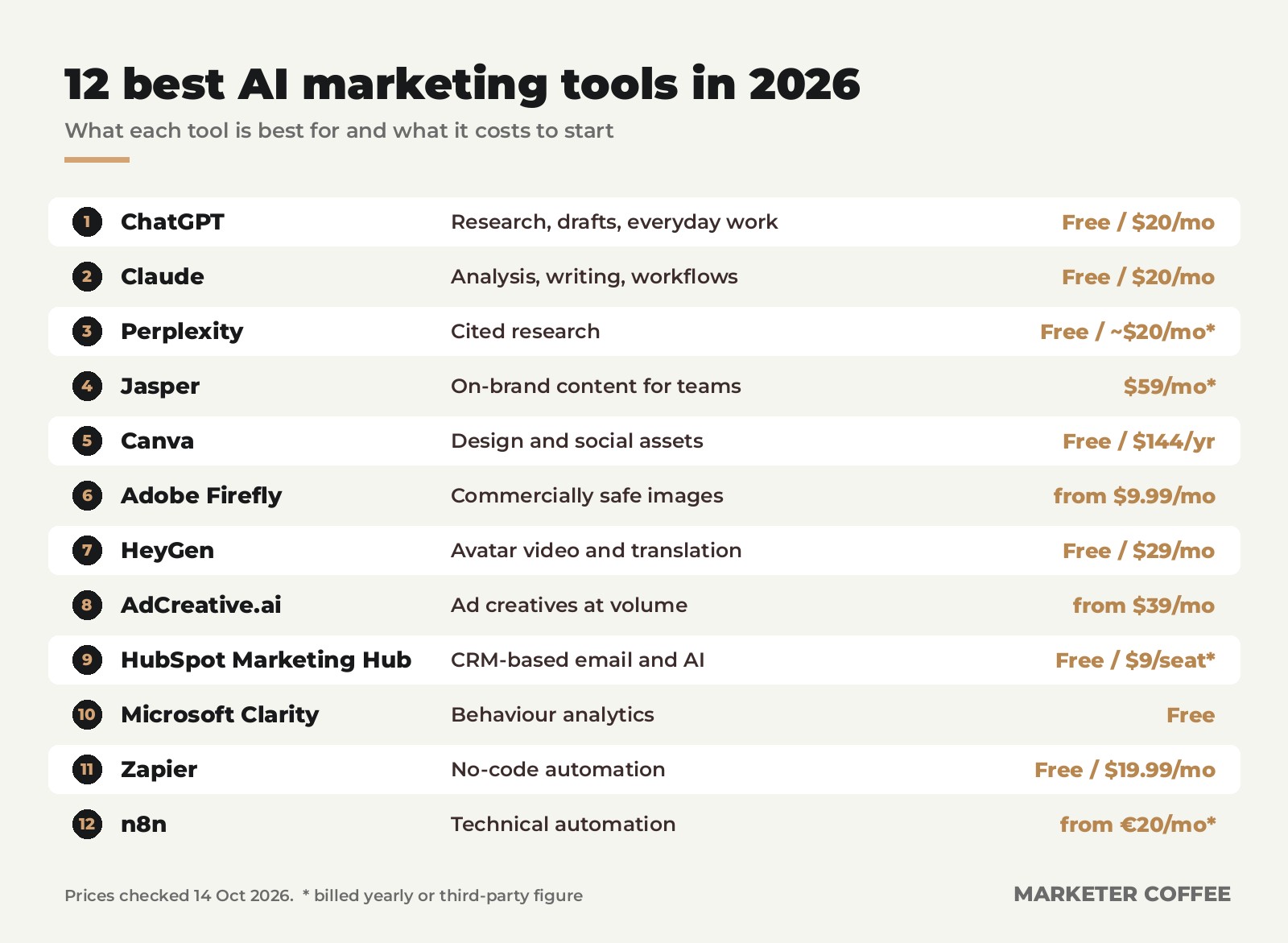
The best AI marketing tools in 2026 are ChatGPT and Claude for research, writing and analysis, Canva and Adobe Firefly for design, HeyGen for video, AdCreative.ai for ad creatives, HubSpot for CRM-led campaigns and Zapier or n8n to connect them. I am Adrian Dąbrowiecki, I run Marketer Coffee, an SEO agency for SaaS and ecommerce brands, and I lead marketing at Testportal. Below are twelve AI marketing tools across research, content, design, ads, analytics and automation, with current prices, what each one is good at, where each one falls short and three stacks by budget.
The biggest change this year is that the general assistants stopped being chat windows. OpenAI launched ChatGPT Work in July 2026, an agent that stays with a project for hours and acts across email, files and calendars, and Anthropic is merging Claude’s chat and Cowork into one product that runs scheduled tasks and works through connected tools. A lot of jobs that needed a dedicated AI marketing tool two years ago can now be done inside one of these two, and that changes what is worth paying for.
What Is an AI Marketing Tool?
An AI marketing tool is software that uses machine learning or large language models to do part of a marketing job, such as researching a market, writing copy, producing images or video, generating ads, analysing behaviour or running a workflow.
The category splits into two groups. General assistants like ChatGPT, Claude and Perplexity can do almost anything with text and data, but they know nothing about your brand until you tell them. Specialist tools like Jasper, HeyGen or AdCreative.ai do one job, usually with templates, brand controls and output formats built for that job. Most teams I talk to end up with one or two assistants and a few specialists around them, the same pattern I describe for SEO software in Best SEO Tools in 2026.
How I Chose These Tools
I picked tools that cover the main stages of a marketing workflow, so the list is balanced across categories rather than twelve writing apps. Within each category I chose the tool I would recommend to a client first, and I weighted three things: output quality, how much time it saves each week and price relative to that time.
Every price below was checked on the vendor’s own pricing page on 14 October 2026. Where a vendor hides prices or shows them only in the browser, I say so and use a dated third-party figure. Ratings come from G2. None of the links in this article are affiliate links.
Adoption is no longer the question. In Ahrefs’ 2026 survey of 301 marketing and SEO professionals, 93% said they use AI to create or help create content, up from 87% a year earlier. The question now is which parts of the work you hand over and which you keep.
12 Best AI Marketing Tools in 2026
The twelve tools are grouped by stage of the workflow, from research to automation, and ranked within that order by how widely useful each one is.
| Tool | Best for | Starting price | Free option |
|---|---|---|---|
| ChatGPT | Research, drafts and everyday work | $8/mo (Go), $20/mo (Plus) | Yes |
| Claude | Analysis, long writing and workflows | $20/mo (Pro) | Yes |
| Perplexity | Research with citations | About $20/mo (Pro) | Yes |
| Jasper | On-brand content for teams | $59/seat/mo, billed yearly | 7-day trial |
| Canva | Design and social assets | $144/yr (Pro) | Yes |
| Adobe Firefly | Commercially safe images and video | $9.99/mo | Free daily generations |
| HeyGen | Avatar video and translation | $29/mo (Creator) | 3 videos/mo |
| AdCreative.ai | Ad creatives at volume | $39/mo | No |
| HubSpot Marketing Hub | CRM-led email and campaigns | $9/seat/mo, billed yearly | Yes |
| Microsoft Clarity | Behaviour analytics | Free | Yes |
| Zapier | No-code automation and agents | $19.99/mo | 100 tasks/mo |
| n8n | Technical automation and AI workflows | €20/mo, billed yearly | Self-hosted Community Edition |
1. ChatGPT
ChatGPT is the default AI tool for most marketers, and for good reason. It writes a usable first draft of almost anything, summarises research, builds spreadsheets and slides, and it is the assistant your colleagues already know how to use, which matters more than any benchmark when you roll something out to a team.
The notable change this year is ChatGPT Work, launched on 10 July 2026. It breaks a project into steps, keeps working on it for hours, acts across connected apps, runs scheduled tasks and can produce finished documents, sheets and simple sites. For marketing that means jobs like a weekly competitor digest or a campaign recap can run without someone pasting data in every Monday.
Where it falls short is voice. Left alone, ChatGPT writes in a recognisable style that readers have learned to skip, so anything public needs real editing. Usage limits on the cheaper plans also run out quickly once you lean on Work for longer tasks. OpenAI’s pricing page did not display amounts when I checked, so the Go and Plus figures come from third-party coverage of the plans; Business pricing comes from OpenAI’s help centre as reported in April 2026.
Pick ChatGPT if you want one assistant the whole team can use from day one. Add Claude if your work involves long documents, analysis or building your own workflows.
2. Claude
Claude is the assistant I use most for work that needs judgement over long inputs: reading a 60-page research report, comparing ten competitor landing pages, or turning a messy export into something a manager can read. Its writing also needs less cleanup than most, which is why many content teams use it for drafts that will carry a byline.
Two things I actually run on it. A Google Apps Script that calls the Claude API to write meta titles and descriptions for hundreds of URLs in a sheet, which a person then reviews. And a five-stage content pipeline for an ecommerce store, where separate agents handle the brief, internal links, fact gathering, writing and editing. Connectors and MCP servers let it read data from tools like Google Drive, Slack or your SEO platform, and scheduled tasks let it repeat work without you.
It falls short on images, where it does not generate anything, and on usage limits, which heavy users hit on Pro. The plan list starts at $20 a month for Pro, Max starts at $100, and Team seats include Claude Code and Cowork. Claude Code is worth knowing about even if you do not write software, because it is what lets a marketer build small tools like the meta script above.
3. Perplexity
Perplexity answers questions with citations, which makes it the fastest way to start market research, check a statistic or see what the web says about a competitor. Every claim links to a source, so you can verify it before it ends up in a deck. Deep Research runs longer investigations and returns a report, and Comet, its own browser, can act on web pages for you.
It is a research tool more than a writing tool. Drafts read flatter than ChatGPT’s or Claude’s, and the quality of an answer depends on the quality of the pages it found, which in some niches is not high. I would also treat it as a useful view of how AI answer engines see your brand: if Perplexity cites your competitors and not you, that is a content and visibility problem worth solving.
Perplexity’s Pro page did not show prices when I checked, so the figures above come from a dated April 2026 pricing guide. Pick it if research is a big part of your week; skip it if ChatGPT’s or Claude’s built-in research is enough.
4. Jasper
Jasper is built for marketing teams rather than individuals. Brand IQ stores your voice, style guide and visual rules so every user writes within them, and a library of more than 100 specialised agents covers jobs like GEO content, research and translation. Content Pipelines turn a repeatable process, such as one product launch producing a blog post, emails and social copy, into a workflow the team runs the same way each time.
The question with Jasper is always whether the brand controls are worth the price over a general assistant with good instructions. For one or two writers they usually are not. For a team of ten producing content in several markets, consistent voice and approvals are what you are paying for. The Pro plan limits you to two brand voices and five knowledge assets, and the custom agent builder, API and Jasper Grid sit in Business, so check the plan comparison before committing. The writing tools are covered in more depth in Best AI Writers.
5. Canva
Canva is where most marketing teams make social posts, presentations, ad variations and simple landing visuals, and its AI features now cover a large share of that work. Canva AI 2.0 is included on paid plans, Magic Resize turns one design into every format you need, and Magic Layers splits a flat image into editable parts.
AI use is metered by an allowance: up to 200 premium uses a month on Pro and 400 on Business, with add-on packs if you need more. That is plenty for a small team and tight for anyone generating images all day. The output is good for social and internal work and less convincing for flagship brand campaigns, where a designer still earns their fee.
The pricing page lists Pro at $144 a year and notes that Teams is closed to new sign-ups, replaced by Business. Pick Canva if non-designers make most of your visuals.
6. Adobe Firefly
Firefly is Adobe’s generative model for images, video and audio, and its main selling point for marketers is that Adobe trains it on content it has rights to. If your legal team asks where a generated image came from, Firefly is the easiest answer to give.

Plans run on generative credits: 2,000 a month on Standard, enough for up to 20 five-second videos, and 4,000 on Pro. Credits reset monthly and do not roll over. Firefly also works inside Photoshop and Express, which is where it is most useful for teams already paying for Creative Cloud.
For pure image quality it is not always the strongest model, and video credits go quickly. The plans page shows a first-year discount on Pro Plus and Premium until 21 October. Pick Firefly if usage rights matter more to you than chasing the newest model.
7. HeyGen
HeyGen turns a script into a video with a realistic presenter, and translates existing videos into more than 175 languages and dialects while matching lip movement. For product explainers, onboarding videos and localised ads, it removes the camera, the studio and most of the editing.
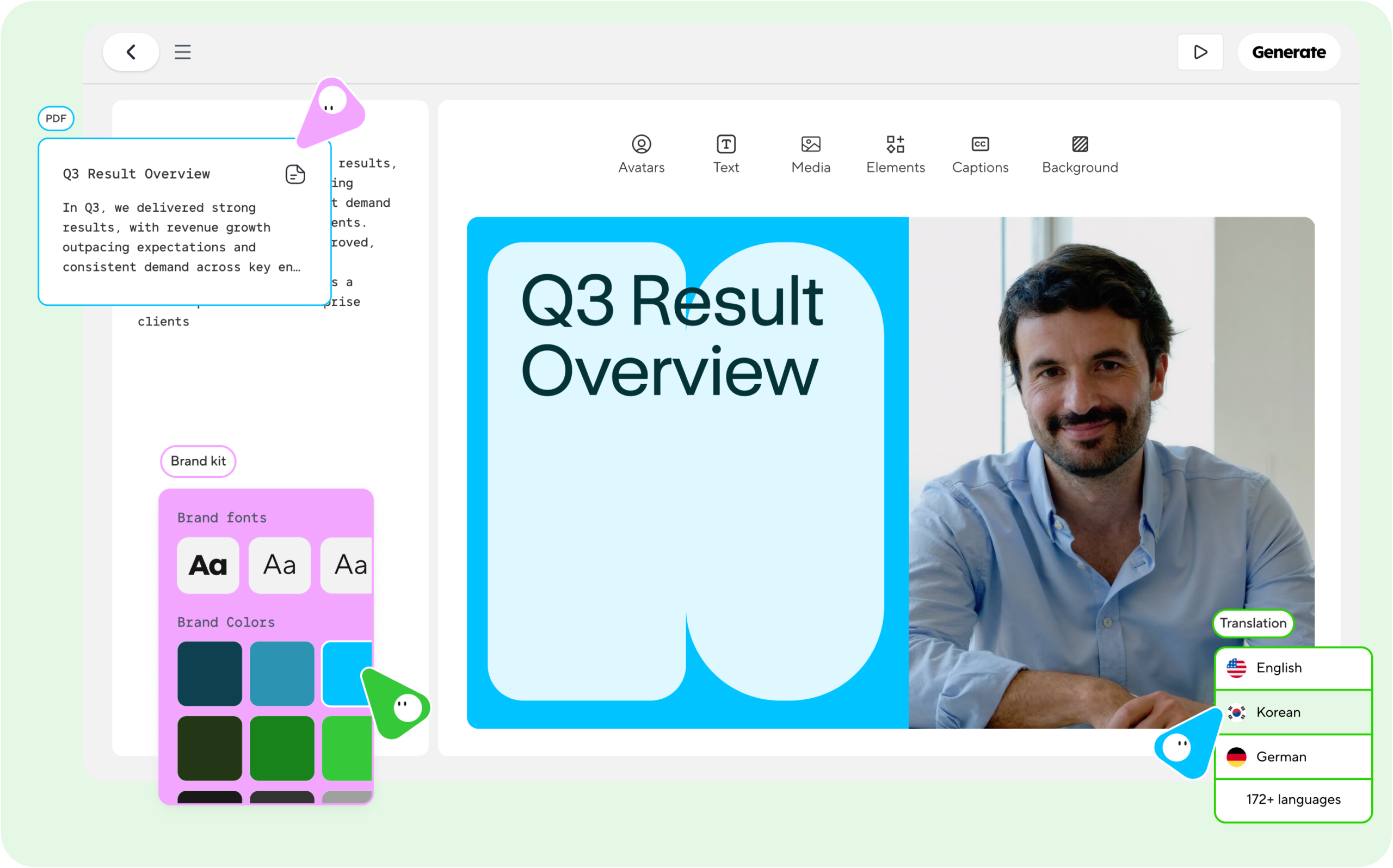
Avatar V, released in April 2026, made presenters more consistent across angles and longer videos, and Video Agent builds a draft video from a text prompt. The limits are the ones you would expect: avatar video works for explaining, less so for emotion or humour, and some audiences still notice. For translation of real footage, it is the most useful tool in this list for brands selling into several countries.
The pricing page lists Creator at $29 a month with 600 credits and videos up to 30 minutes. Pick HeyGen if video is a channel you have been avoiding because of production cost.
8. AdCreative.ai
AdCreative.ai generates banner and social ad variations from your brand assets and scores them for predicted performance, so a paid media team can launch twenty variations instead of three. It also includes competitor insights, which show what other brands in your category are running.
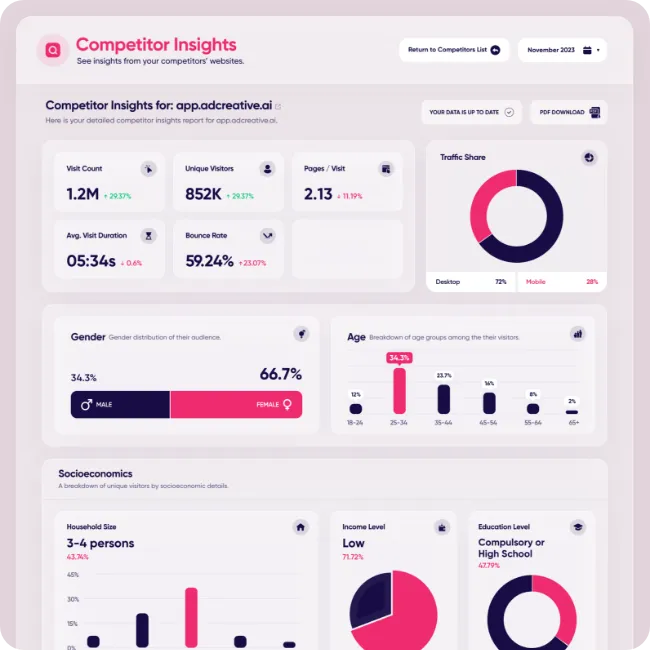
The scoring is a prediction, not a result, and your own test data will always beat it. The creatives are solid performance ads, and they look like performance ads, which is fine for prospecting and less fine for brand campaigns. Credits are the thing to watch: the entry plan includes 20 a month and one brand, and agencies quickly move to Professional.
AdCreative.ai lists its monthly and quarterly prices on its site; yearly billing is advertised at 50% off but the amount was not shown when I checked. Pick it if creative volume is the bottleneck in your paid campaigns.
9. HubSpot Marketing Hub
HubSpot is not an AI tool first. It is a CRM and marketing platform with AI, called Breeze, built into everything: writing emails, building segments, summarising contacts and running agents for content and customer conversations. The value is that the AI works on your own customer data, which a general assistant cannot see.
For B2B and SaaS teams that already run on HubSpot, turning on Breeze is the cheapest way to add AI to the parts of marketing closest to revenue. The catch is the price ladder. Starter is cheap, Professional at $800 a month with a $3,000 onboarding fee is where most automation lives, and agents consume HubSpot credits, 3,000 of which come with Professional. The approach I recommend to SaaS clients is in B2B SaaS SEO.
The prices above come from HubSpot’s own Marketing Hub pricing guide, updated September 2026, because the pricing page loads its figures in the browser. Pick HubSpot if your marketing lives in a CRM.
10. Microsoft Clarity
Clarity records sessions, builds heatmaps and, with Copilot, summarises patterns across thousands of visits in a few sentences. Instead of watching recordings for an hour, you ask why visitors drop off on the pricing page and get an answer you can check against the recordings it points to.
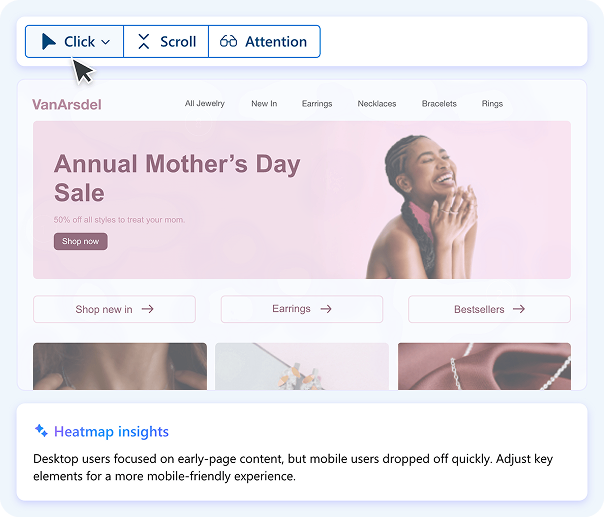
It has also added an AI visibility report that shows when your content is cited and how AI bots crawl your site, which is unusual for a free tool. Clarity does not replace GA4 for attribution and conversion reporting, and its AI summaries are a starting point rather than a finding. But at no cost, it is the first analytics tool I would add to any marketing site.
11. Zapier
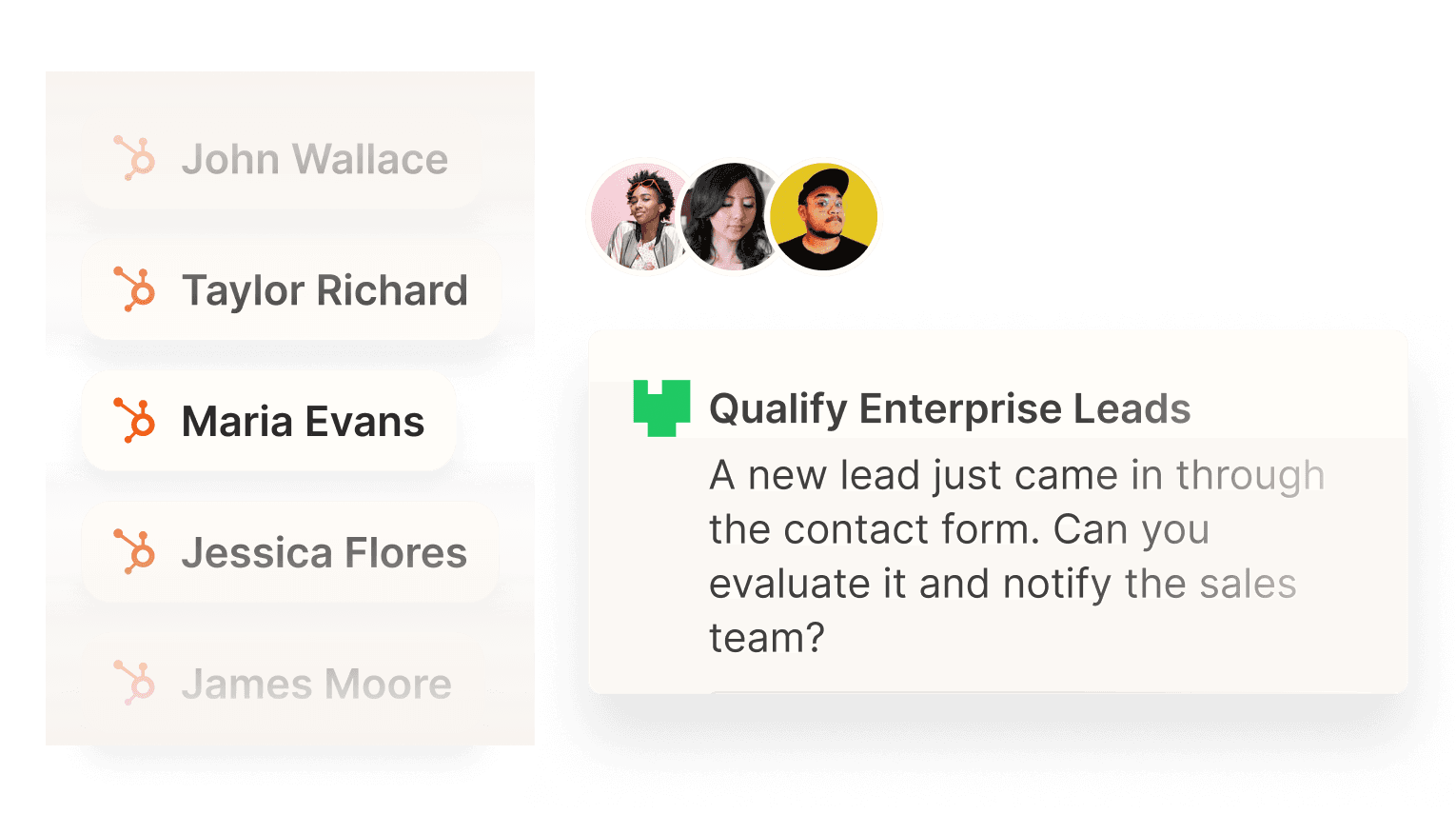
Zapier connects the tools above to each other and to the rest of your stack, with more than 9,000 apps. It is how a form fill becomes a CRM contact, a Slack message and a personalised email without anyone copying anything. Zapier Agents add a layer on top: you describe a job, such as qualifying leads or preparing for meetings, and the agent does it across your connected apps.
Zapier is the easiest automation tool to learn and the most expensive one to scale. Bills grow with tasks, and pay-per-task overages are charged at a higher rate. The pricing page includes a 14-day Professional trial with no card. Pick it if marketers, not developers, will build the automations. For a deeper look at the agent side, see Best AI Agent Platforms for Marketers.
12. n8n
n8n does what Zapier does with more control: code in any step, AI agent nodes, multi-agent setups, human approvals and the option to host it yourself. For marketing teams with a technical person, it is where serious AI workflows get built, such as enriching every new lead, drafting a reply and waiting for approval before sending.
It asks more of you. The interface assumes you understand data structures, and self-hosting means you own updates and uptime. Cloud plans count workflow executions rather than steps, which makes complex workflows much cheaper than on Zapier: Starter includes 2,500 executions a month and Pro 10,000, per the pricing page. If n8n is close but not quite right, I compared the options in Best n8n Alternatives.
What AI Marketing Stack Should You Use?
The right AI marketing stack depends on team size and channel more than on budget, and a single paid assistant covers more than most people expect.
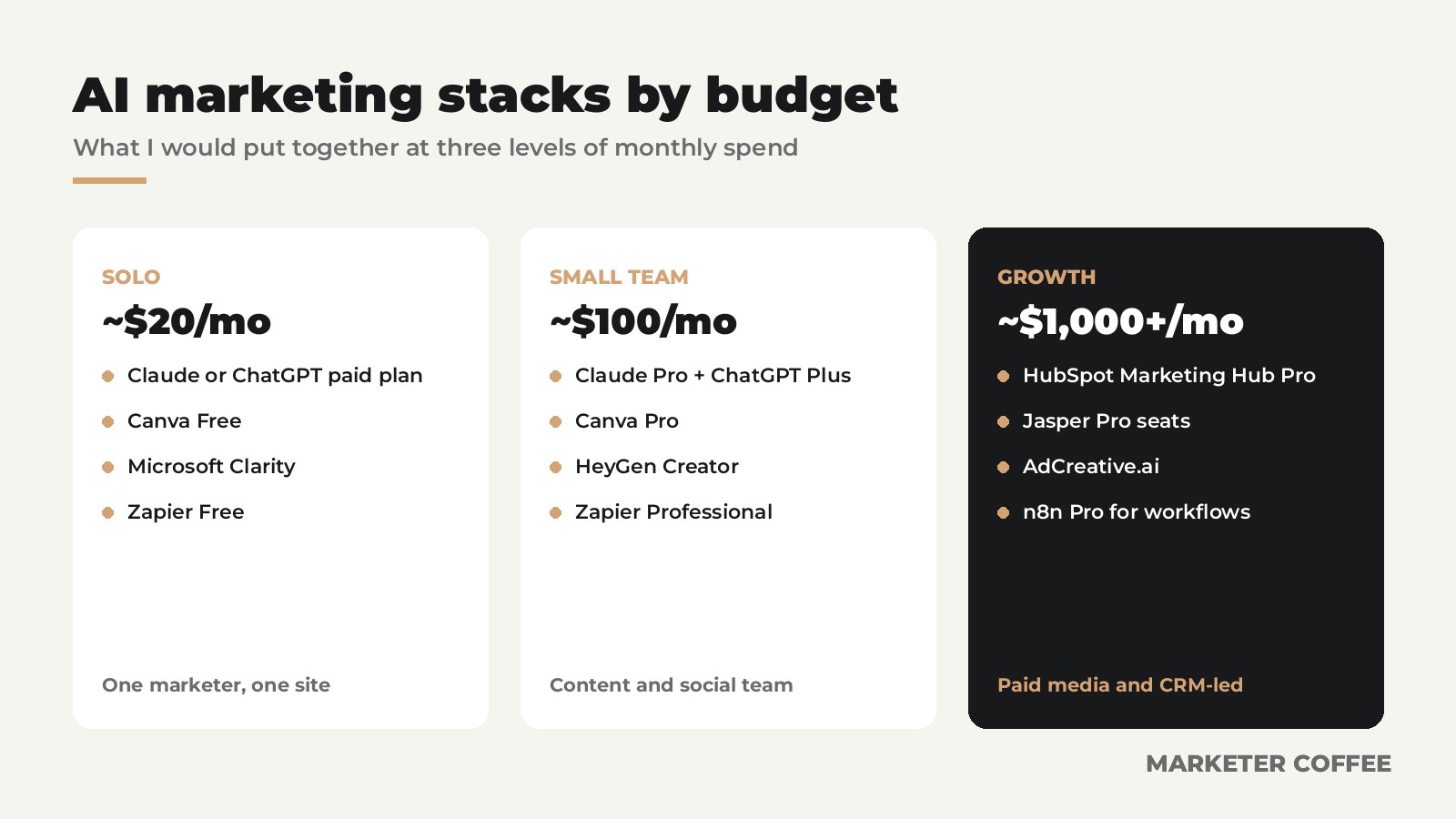
A solo marketer can do serious work for about $20 a month: one paid assistant, Canva Free, Clarity and Zapier’s free plan. That covers research, drafts, visuals, behaviour data and a few simple automations.
A small content and social team, at about $100 a month, adds the second assistant, Canva Pro, HeyGen Creator and Zapier Professional. Two assistants sounds redundant, but they fail in different ways, and checking one against the other catches more errors than either alone.
A growth team running paid media and a CRM spends $1,000 or more, mostly on HubSpot Professional, with Jasper for brand control, AdCreative.ai for ad volume and n8n for the workflows that tie it together. At that level, the tools matter less than the process around them, which is the part I cover in SEO Strategy.
What Is the Best Free AI Marketing Tool?
The best free AI marketing tool is ChatGPT’s free plan for general work, with Claude’s free plan close behind for writing and analysis.
For specific jobs, Canva Free covers design, Microsoft Clarity covers behaviour analytics with no limits, and Zapier’s free plan handles simple automations up to 100 tasks a month. HeyGen’s free plan is enough to test whether avatar video works for your audience before you pay for it.
Is ChatGPT or Claude Better for Marketing?
ChatGPT is better for broad everyday marketing work and image generation, and Claude is better for long documents, analysis and writing that needs less editing.
Both cost $20 a month at the entry paid tier, and both now run agents that work across your apps. In practice I would not choose on features, which change every few weeks. I would give the same brief to both for a week and keep the one whose drafts your editor changes less.
Will AI Replace Marketers?
AI will not replace marketers, but it is already replacing tasks that used to fill a junior marketer’s week.
First drafts, resizing assets, summarising calls, writing variations and building reports are now fast and cheap. Deciding what to say, to whom, and whether the result is true and good enough to publish is not. The marketers who do well with these tools are the ones who were already good at briefing and editing.
FAQ: AI Marketing Tools
Short answers to the questions people ask most when choosing AI marketing software.
What are the best AI marketing tools in 2026?
The best AI marketing tools in 2026 are ChatGPT and Claude for research and writing, Canva and Adobe Firefly for design, HeyGen for video, AdCreative.ai for ads, HubSpot for CRM-led campaigns, Microsoft Clarity for analytics, and Zapier or n8n for automation.
How much do AI marketing tools cost?
Most AI marketing tools start between free and $50 a month per user. ChatGPT Plus and Claude Pro cost $20 a month, Canva Pro $144 a year and HeyGen Creator $29 a month, while platforms like HubSpot Marketing Hub Professional start at $800 a month.
Which AI tool is best for social media marketing?
Canva is the best AI tool for social media visuals, and ChatGPT or Claude are the best for captions and post ideas. Add HeyGen if you publish short videos and do not want to film them.
Are AI-generated images safe to use in ads?
AI-generated images are generally usable in ads, but usage rights depend on the tool. Adobe Firefly is trained on content Adobe has rights to, which makes it the safest option for commercial use. Check each vendor’s terms before running paid campaigns.
Do I need a separate AI tool for SEO?
Yes, if SEO is a real channel for you. AI assistants have no search volume, ranking or backlink data of their own, so you still need tools like Ahrefs, Search Console and Screaming Frog. The full list is in Best SEO Tools in 2026.
Want AI in Your Marketing Without the Guesswork?
Picking AI tools is the easy part. Building a process where they produce content and pages that actually rank and convert is where most teams get stuck. We are Marketer Coffee, a Poland-based SEO agency working with SaaS and ecommerce brands across the US, UK and Europe, at rates 40% to 60% below comparable US and UK agencies, and we build AI into our own workflows every day. Every engagement starts with a free preliminary audit and a 90-day plan.
See scope and pricing in International SEO Services, SaaS SEO Services or Ecommerce SEO Services. The Planika Fires case study shows how an unindexed domain reached 1,052 monthly US visits with seven articles and no link building.
Written by Adrian Dąbrowiecki, founder of Marketer Coffee and SEO consultant with 7+ years in SaaS and ecommerce, specializing in topical authority and semantic SEO. Prices checked on each vendor’s pricing page on 14 October 2026. ChatGPT, Perplexity and HubSpot figures come from dated secondary sources because their pricing pages did not display amounts: CometAPI, ChatGPT pricing 2026; Finout, Perplexity pricing 2026; HubSpot, Marketing Hub pricing. Ratings: G2. Statistics and news: Ahrefs, AI content creation survey 2026; The Next Web, ChatGPT Work launch; Anthropic, Claude overview. Screenshots belong to their respective vendors. No affiliate links.