SEO in the USA is the process of optimizing a website to rank higher on search engines within the United States market. The US is the world’s largest economy by nominal GDP ($30.6 trillion in 2025, according to the IMF) and the second-largest e-commerce market globally, with $1.23 trillion in online retail sales in 2025, as reported by the US Census Bureau. Search engine optimization in the American market, also referred to as US SEO or American market SEO, targets 322 million internet users across 50 states with distinct regional economies, search behaviors, and competitive dynamics.
This article covers the structure of the US digital market, how American search behavior differs from other English-speaking countries, which search engines dominate the US, how local SEO works across American states and cities, and what European companies need to consider when entering the US market through organic search.
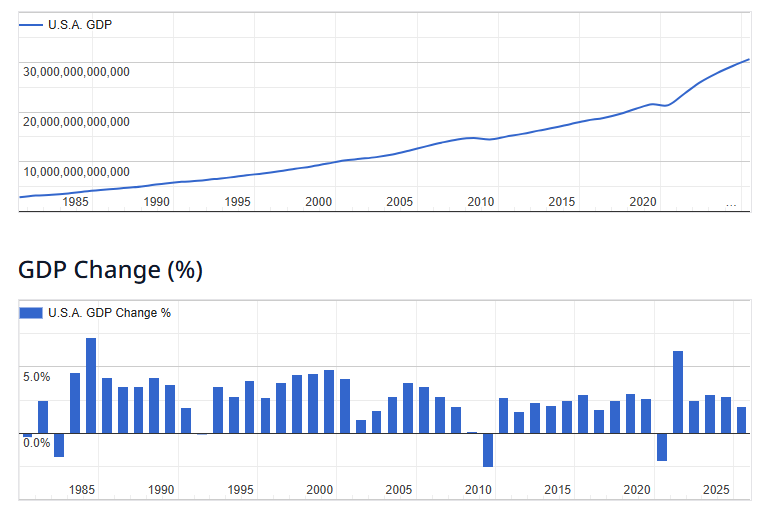
source: https://www.worldometers.info/gdp/us-gdp/
What Is SEO in the USA?
SEO in the USA is the practice of improving a website’s visibility in organic search results on American search engines, primarily Google.com. The Search Engine Journal defines SEO as the process of improving the quality and quantity of website traffic from search engines through non-paid (organic) results.
US-market SEO differs from SEO in other countries due to three factors: the scale of competition (over 11.9 million e-commerce sites operate in the US, according to MarkinBlog), the specificity of American English search intent, and the dominance of Google as the primary search engine with approximately 85 to 84% market share across all devices in the United States, as tracked by StatCounter.
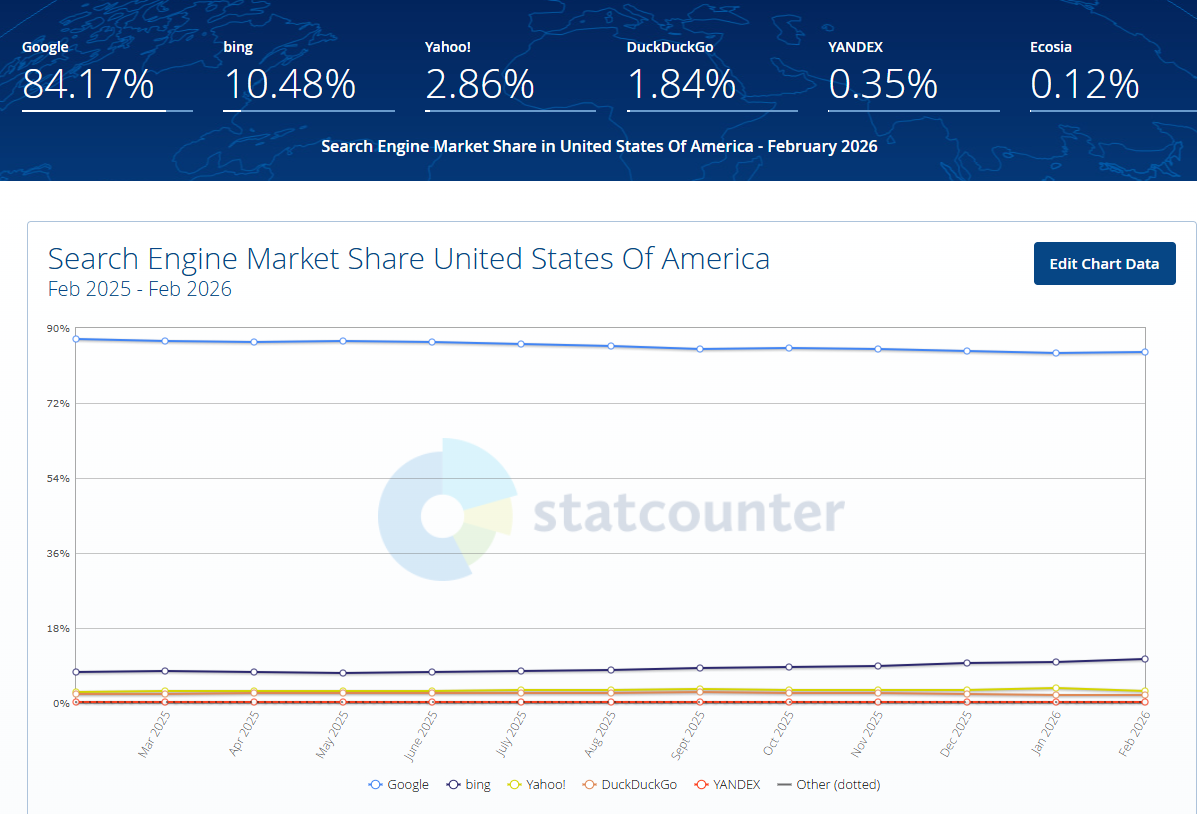
source: https://gs.statcounter.com/search-engine-market-share/all/united-states-of-america
How Big Is the US Digital Market?
The United States has the highest number of internet users among Western countries and the largest digital advertising market in the world. Three key metrics define the scale of the US digital market: internet penetration, e-commerce revenue, and GDP. Each metric determines budget allocation, channel prioritization, and competitive benchmarking for marketing leaders entering the American market.
How Many People Use the Internet in the United States?
322 million people used the internet in the United States as of January 2025, according to DataReportal’s Digital 2025 report. Internet penetration in the US stood at 93.1% of the total population. Pew Research Center’s 2025 survey of 5,022 US adults found that 78% of Americans subscribe to broadband internet at home, while 16% are smartphone-only internet users with no home broadband connection.
How Large Is the US E-commerce Market by Revenue?
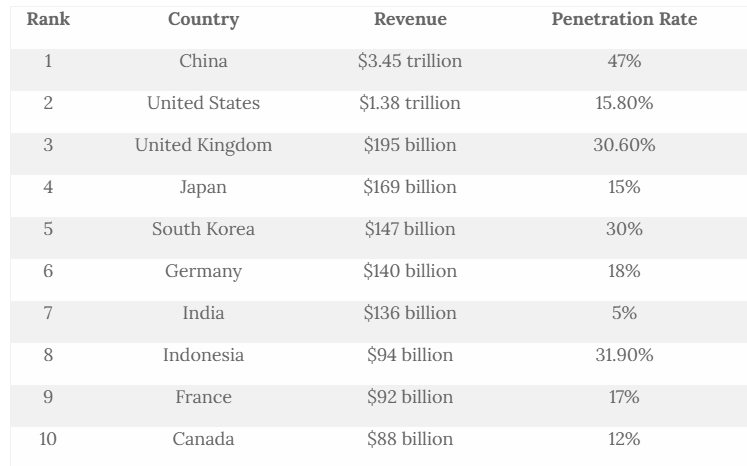
US retail e-commerce generated $1.23 trillion in sales in 2025, a 5.4% increase from 2024, according to the US Census Bureau’s Quarterly Retail E-Commerce Sales Report. E-commerce accounted for 16.4% of total US retail sales in 2025. The US is the second-largest e-commerce market in the world by revenue, trailing China ($3.45 trillion in 2025), according to data synthesized by MobiLoud from Statista, eMarketer, and Trade.gov sources. 76% of US e-commerce transactions occur via mobile devices.
source: https://chainstoreage.com/us-e-commerce-market-nears-14t-trails-one-country
What Is the GDP of the United States?
The nominal GDP of the United States reached $30.6 trillion in 2025, according to the International Monetary Fund (IMF). The US accounts for approximately 26% of global GDP. Consumer spending drives roughly 70% of US GDP, making the American market the most consumption-oriented economy in the world.
Which Search Engines Do Americans Use?
Americans use Google as the dominant search engine, with approximately 85 to 87% market share across all devices. Bing holds a stronger position in the US than in any other major market. The table below shows search engine market share in the US as of 2025:
| Search Engine | US Market Share (all devices) | Notes |
|---|---|---|
| ~85 to 87% | Lower than global average (~90%) | |
| Bing | ~7 to 8% | Strongest market globally, Copilot AI integration |
| Yahoo | ~2.5% | Declining year-over-year |
| DuckDuckGo | ~2.5% | Privacy-focused, growing user base |
Source: StatCounter Global Stats, Statista (2024 to 2025 data).
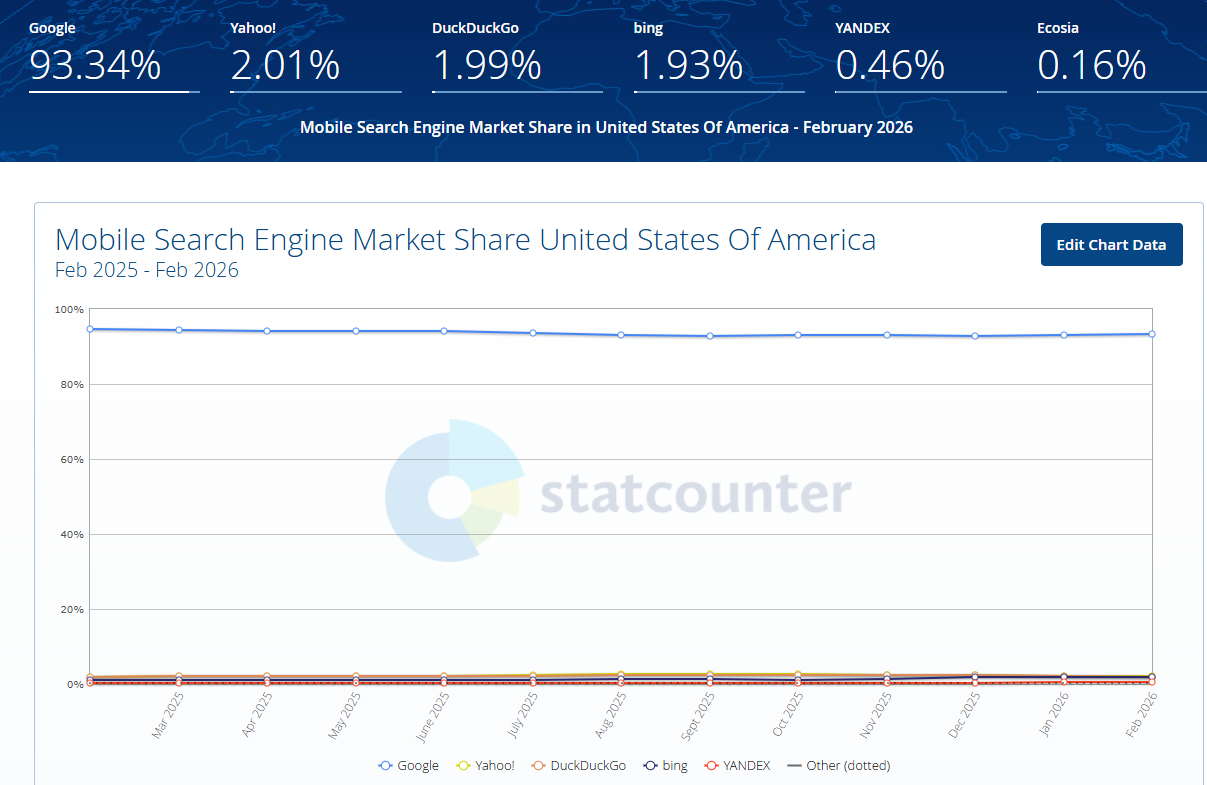
Google’s US market share is approximately 3 to 5 percentage points lower than its global average. This difference is driven by Bing’s deep integration with Microsoft Windows, Microsoft Edge browser, and Microsoft 365 products widely used in American corporate environments. On mobile devices, Google’s share in the US exceeds 94%, according to StatCounter.
How Does American Search Behavior Differ from Other Markets?
American search behavior differs from European and other English-speaking markets in vocabulary, intent structure, and the role of Amazon as a competing search platform. These differences affect keyword research, content strategy, and conversion optimization for US-targeted SEO. For marketing directors and growth leaders evaluating channel allocation, understanding where American buyers start their product research determines where SEO budget delivers the highest return.
Where Do Americans Start Their Online Shopping Journey?
44% of American online shopping journeys start with a Google search, while 41% start directly on Amazon or brand websites, according to a 2024 survey by Jungle Scout. 106.8 million Americans shop via social media. The US has 167 million Amazon Prime members, making Amazon a direct competitor to Google for product-related search queries. US-market SEO strategies account for this split by targeting informational and comparison queries on Google, where Amazon’s dominance is weaker.
What Role Does Mobile Play in US Search and E-commerce?
Mobile devices account for over 60% of all US e-commerce traffic and 76% of e-commerce transactions, according to MobiLoud’s 2025 analysis. Google’s mobile search share in the US exceeds 94%. 83% of American consumers research products online before visiting a physical store. Mobile-first indexing and Core Web Vitals performance on mobile devices are critical ranking factors for US-targeted websites.
source: https://gs.statcounter.com/search-engine-market-share/mobile/united-states-of-america
What Is the Difference Between American English and British English in SEO?
The difference between American English and British English in SEO is spelling, vocabulary, and phrasing that directly affect keyword targeting and search intent matching. A keyword strategy built on British English underperforms in the US market because American users search with different terms.
Examples of vocabulary differences relevant to SEO:
| British English | American English | SEO Impact |
|---|---|---|
| colour | color | Spelling affects exact-match queries |
| flat | apartment | Different primary keyword |
| boot (of a car) | trunk | Different search intent |
| mobile phone | cell phone | Different head keyword |
| holiday | vacation | Different content targeting |
| solicitor | attorney / lawyer | Different legal industry keywords |
American English also uses distinct idiomatic phrases in search queries. US users search for “401k rollover,” “health insurance marketplace,” “DMV appointment,” and “tax refund status,” terms with no direct British English equivalent. US-market content requires American spelling, American vocabulary, and American units of measurement (inches, feet, miles, Fahrenheit, pounds, US dollars) to match search intent accurately.
How Does Local SEO Work in the United States?
Local SEO in the United States targets search queries that include a city, state, or regional modifier, such as “SEO agency New York” or “SaaS marketing Chicago.” The US has 50 states, over 19,000 incorporated cities, and 3,143 counties. Each geographic area generates distinct local search demand.
Google Business Profile (GBP) is the primary tool for local SEO visibility in the US. Businesses that maintain a complete and verified GBP listing appear in Google’s Local Pack, the map-based results shown for local queries. BrightLocal’s 2024 Local Consumer Review Survey found that 87% of US consumers used Google to evaluate local businesses in 2023.
US local SEO targets three main areas. City-level targeting optimizes for queries such as “software development company Austin.” State-level targeting optimizes for queries such as “best CPA firms in California.” Regional targeting optimizes for queries such as “Southeast US logistics providers.” Each level requires separate landing pages with location-specific content, local citations in US business directories (Yelp, BBB, Yellow Pages), and consistent NAP (Name, Address, Phone) data across all platforms.
What Are the Top E-commerce Platforms in the US Market?
The top e-commerce platforms in the US market are Amazon (#1, approximately 38% market share), Walmart (#2), Apple (#3), The Home Depot (#4), and Target (#5), according to Statista’s 2024 US E-commerce Report.
| Rank | Platform/Retailer | Position |
|---|---|---|
| 1 | Amazon | ~38% market share |
| 2 | Walmart | #2 online retailer |
| 3 | Apple | #3 by e-commerce revenue |
| 4 | The Home Depot | #4 |
| 5 | Target | #5 |
Source: Statista US E-commerce Report 2024.
Shopify is the leading e-commerce platform software in the US, used by 28% of US online stores, according to ECDB. Mastercard is the most widely offered payment provider among US e-commerce retailers. UPS is the most common shipping provider offered by US online stores. For growth marketing leaders evaluating US market entry, Amazon’s 38% market share means SEO strategy must account for Amazon as both a competitor and a potential distribution channel.
What Payment Methods Do American Consumers Prefer?
American consumers prefer credit and debit cards as the dominant payment method for online purchases. The United States has approximately 3.26 credit cards per capita, making it the most credit-card-dependent consumer market in the world.
Digital wallets are the fastest-growing payment method in the US. PayPal remains the most widely trusted third-party payment option for American online shoppers. Apple Pay and Google Pay adoption is increasing, particularly among consumers aged 18 to 34. Buy Now, Pay Later (BNPL) services, including Klarna and Affirm, processed $133 billion in US transactions in 2024, a 14% year-over-year increase.
US-targeted e-commerce SEO strategies integrate payment method information into product pages and checkout flows. Displaying accepted payment methods increases conversion rates among American consumers who expect multiple payment options at checkout.
What Is E-E-A-T and Why Does It Matter for US SEO?
E-E-A-T stands for Experience, Expertise, Authoritativeness, and Trustworthiness. Google introduced this framework in its Search Quality Rater Guidelines to evaluate content quality. E-E-A-T is not a direct ranking factor. E-E-A-T shapes how Google’s algorithms assess page quality, particularly for YMYL (Your Money or Your Life) topics including health, finance, legal, and safety content.
E-E-A-T is especially important for US-market SEO because American Google results face higher quality standards than most other markets. The US has the highest density of competing authoritative publishers, including major media brands, .edu institutions, .gov resources, and established industry publications, all competing for the same high-value search queries. US-targeted content builds E-E-A-T through four elements. Author bios with verifiable credentials demonstrate expertise. Citations from peer-reviewed or institutional sources demonstrate authoritativeness. Original data and research demonstrate experience. Clear editorial policies demonstrate trustworthiness.
How Can a European Company Build an SEO Strategy for the US Market?
A European company builds an SEO strategy for the US market by addressing four areas: domain structure, content localization, geotargeting configuration, and US-specific backlink acquisition. Each area directly affects how Google indexes and ranks the website for American users. For CEOs and marketing directors leading international expansion, these four decisions determine the speed and cost of organic market entry.
What Domain Structure Works Best for US Market Entry?
Three domain structures work for US market targeting. A country-specific subdirectory (example.com/us/) consolidates domain authority under one root domain. A subdomain (us.example.com) separates US content while maintaining brand connection. A separate .com domain provides maximum brand flexibility but requires building authority from zero. Google’s John Mueller has confirmed that all three structures are valid for geotargeting. The choice depends on the company’s existing domain authority and long-term market strategy.
How Does Hreflang Work for US vs. UK English?
Hreflang tags tell Google which language and regional version of a page to serve to users in different locations. For a company targeting both the US and UK markets in English, hreflang implementation requires separate language-region codes: en-us for American English content and en-gb for British English content. Incorrect hreflang implementation causes Google to serve the wrong regional version to American users, reducing click-through rates and increasing bounce rates.
How Do You Build US-Specific Domain Authority?
US-specific domain authority requires backlinks from US-based websites. Links from European domains carry less weight for US-targeted rankings. US link building follows four steps. Identify authoritative American publications and industry-specific US blogs. Develop digital PR campaigns that secure coverage on American media outlets such as TechCrunch, Inc.com, Forbes, and industry-specific publications. Submit listings to US business directories and .edu or .gov resources where applicable. Monitor domain authority growth and adjust outreach volume based on competitive gap analysis.
Building a US SEO strategy from Europe requires deep knowledge of American search behavior, competitive analysis, and US-specific technical implementation. If you are a European or Polish company looking to enter or scale in the US market, Marketer Coffee helps companies build and implement data-driven SEO strategies tailored to the American market, from domain architecture and hreflang setup to US content strategy and link building.
Book a free consultation to discuss your US market entry plan.
FAQ — SEO in the USA
How long does it take to rank on Google in the US market?
Ranking on Google in the US market takes 6 to 12 months for moderately competitive keywords and 12 to 24 months for highly competitive terms. The timeline depends on three factors: the website’s existing domain authority, the competitiveness of the target keyword, and the quality of the content and backlink strategy. New domains targeting competitive US keywords require longer timelines than established websites expanding into the US market.
How much does SEO cost in the US market?
SEO services for the US market cost between $3,000 and $20,000+ per month, depending on scope, competition level, and agency expertise. Ahrefs’ 2024 SEO Pricing Survey found that the average monthly SEO retainer in the US is $3,209. Enterprise-level US SEO campaigns targeting competitive national keywords cost $10,000 to $30,000+ per month. The higher cost reflects the intensity of competition in the American search market.
Is Bing worth targeting for US SEO?
Bing is worth targeting as a secondary search engine for US SEO. Bing holds approximately 7 to 8% of the US search market, its highest share globally. Bing users tend to be older (35+), use Windows desktop devices, and have higher average incomes. B2B companies and enterprise SaaS providers see disproportionate traffic from Bing because Microsoft Edge is the default browser in many US corporate environments.
What is the biggest mistake companies make when entering the US market with SEO?
The biggest mistake is using British English content for the US market. American users search with American vocabulary, American spelling, and American-specific terms. Content written in British English targets the wrong keywords, generates lower click-through rates, and signals to Google that the page is not intended for US audiences. The second most common mistake is failing to build US-specific backlinks, relying instead on European link profiles that carry minimal authority for American search rankings.
Can a company rank in the US without a US-based office?
A company can rank in the US without a US-based office, but a physical US presence adds relevance signals that strengthen US-targeted rankings. Google uses location-related signals including server location, local business listings, US-based backlinks, and Google Business Profile data. A US office enables registration in local directories, strengthens local SEO for city and state-level queries, and increases trust signals for American users.
Companies without a US office compensate through four elements. US-hosted CDN infrastructure reduces latency for American users and signals geographic relevance. Hreflang tags with en-us targeting direct Google to serve the correct regional version. US-based backlink profiles built through digital PR on American publications replace the authority that a local presence provides. American English content written for US search intent matches the vocabulary and phrasing American users expect.
A US office is not a requirement for ranking, but it is a competitive advantage. Companies that plan long-term US market expansion benefit from establishing a physical presence that unlocks local SEO opportunities unavailable to remote-only operations.